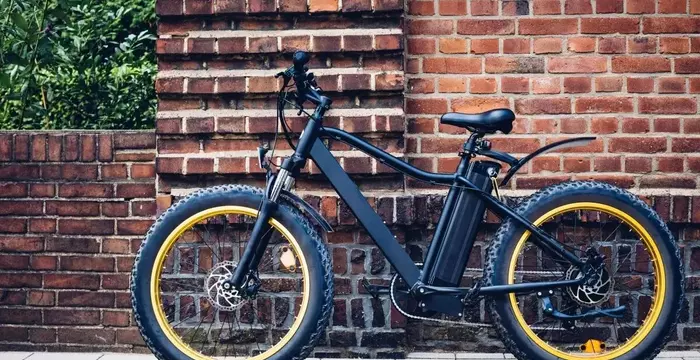
Summit County sheriff seeing ‘enormous increase’ in kids riding e-bikes recklessly

Ann Curry

Award-winning journalist and former NBC News anchor and Today show co-host.

Navigating the E-Bike Dilemma: Balancing Safety and Freedom for Young Riders

As the popularity of electric bicycles (e-bikes) continues to soar, local authorities in Summit County, Utah, are grappling with the challenges of ensuring the safety of young riders without stifling their sense of freedom and outdoor exploration. The Summit County Sheriff's Office has been receiving an increasing number of reports of reckless e-bike behavior, prompting a need for a balanced approach to address the issue.

Empowering Young Riders While Prioritizing Safety

Navigating the Legal Landscape of E-Bikes

The legal landscape surrounding e-bikes in Utah is complex, with the state recognizing three distinct classes of these vehicles. Class 1 e-bikes are pedal-assisted without a throttle, reaching speeds of up to 20 mph, while Class 2 e-bikes are also pedal-assisted but with a throttle, also topping out at 20 mph. The more powerful Class 3 e-bikes are pedal-assisted without a throttle, but can reach speeds of up to 28 mph, requiring riders under the age of 21 to wear helmets.However, the state law is largely silent on e-bikes that do not conform to these three classes, leaving a gray area that local authorities must navigate. A recent law that took effect in May 2022 requires out-of-class e-bikes sold in Utah to have a sticker indicating that they are not considered e-bikes, but it stops short of formally defining them as motor vehicles.

Enforcement Challenges and Community Collaboration

Sgt. Skyler Talbot, a spokesperson for the Summit County Sheriff's Office, acknowledges the difficulties in enforcing e-bike regulations, particularly when it comes to young riders. "We've kind of come up against, 'OK, well this is a difficult thing for deputies to enforce,'" he said. "We're certainly not going to chase kids through parking lots. That's just going to increase the danger."Instead, the Sheriff's Office is focusing on educating parents and their children about the applicable laws and the importance of responsible e-bike usage. Talbot emphasizes that this approach is not driven by a desire to prevent kids from enjoying the outdoors, but rather a concern for their safety. "What we don't want to see is kids getting hurt and our fear—and I think a fear that is shared by a lot of the community—is that one day, we're going to have a kid very badly injured or tragically killed on an e-bike," he said.

Local Governments Take Action

The concerns raised by the Summit County Sheriff's Office are echoed by local governments in the region. After a recent incident where three Wasatch High School students on an e-bike collided with a car and were hospitalized, nearby communities are taking steps to address the issue.The town of Midway is currently weighing potential restrictions on e-bike usage, while Oakley is considering classifying certain e-bikes as motor vehicles, which would subject them to additional regulations. Additionally, Park City and Summit County have implemented 15 mph speed limits on some trails, aiming to create a safer environment for all users.

Balancing Freedom and Responsibility

The e-bike dilemma in Summit County highlights the delicate balance between empowering young riders to explore the outdoors and ensuring their safety, as well as the safety of other trail and road users. While local authorities are grappling with the challenges of enforcement and regulation, their primary focus remains on educating the community and fostering a shared understanding of the importance of responsible e-bike usage.As the popularity of e-bikes continues to grow, it will be crucial for policymakers, law enforcement, and the community to work together to find innovative solutions that preserve the sense of freedom and adventure for young riders, while prioritizing their safety and the safety of others. By striking this balance, Summit County can serve as a model for other communities facing similar challenges in the rapidly evolving world of electric transportation.

findnewtop.com

icon

Medical Education

Language Education

Professional skills

Art Training

Corporate Training

Preparing the Buffalo: Oneida event combines community and food traditionNews

Preparing the Buffalo: Oneida event combines community and food tradition

The article describes a three-day cultural event organized by the Oneida Nation's Tsyunhehkwa Farm, focusing on the traditional buffalo harvest. Over the three days, participants learn about the buffalo's anatomy, nutrition, and prepare the meat, which is then distributed back to the community. The event aims to create a sense of community, allowing families to engage in traditional food practices and learn about them. This is the first year of the cultural event, which takes place on the 83-acre Tsyunhehkwa Farm, a program dedicated to offering workshops and classes about plants and wildlife.
By Lester Holt
Farm stand offers brief oasis in west Charlotte food desert, and vision of a different food systemNews

Farm stand offers brief oasis in west Charlotte food desert, and vision of a different food system

The article discusses the Carolina Farm Trust's (CFT) new distribution center and pop-up produce stand in the Hoskins community, a food desert in Charlotte, North Carolina. The center provides fresh, locally-sourced produce to residents who lack access to grocery stores. The facility also houses a bakery, kitchen, and office space, with seven employees hired from the local community. CFT aims to support local farmers, reduce food waste, and promote sustainable farming practices. The nonprofit is raising funds to expand the center and build a grocery store, teaching kitchen, and meat processing facility to further serve the Hoskins community.
By Ann Curry
Second Harvest plans emergency food distributionNews

Second Harvest plans emergency food distribution

Second Harvest Food Bank is hosting an emergency food distribution event on September 10 to help families in Acadiana prepare for an upcoming storm. The distribution aims to provide essential supplies to at-risk families who may be affected. The event coincides with Hunger Action Day, highlighting the organization's commitment to fighting hunger and supporting the community during uncertain times. Second Harvest remains dedicated to serving as a reliable resource for the community, both during and after the disaster has passed.

By Isabel Allende